Organic Crib Mattresses · Nursery Sleep
A Safer Nursery Sleep Setup: Evaluating Organic Crib Materials and Fit
Organic fabrics and thoughtfully chosen materials can be part of a considered nursery, but they are not substitutes for safe design, a correct fit, or careful use. When preparing a crib, begin with the sleep surface itself: check that the mattress is made for the crib, sits securely, and is firm, flat, and used according to the manufacturer’s instructions. Then consider what its materials and certifications can—and cannot—tell you.
Published October 18, 2026
The most important question is not a label
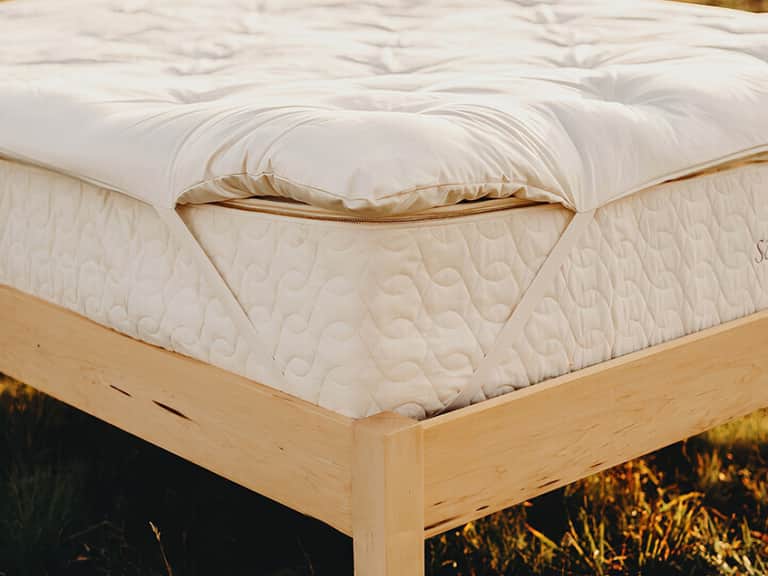
In a nursery, the most compelling details are often tactile: a cotton cover, a natural-fiber filling, a neatly finished seam. Organic materials can appeal to caregivers who want to know more about what touches a baby’s sleep environment. Yet a description such as “organic,” “natural,” or “chemical-conscious” does not, by itself, establish that a crib mattress is appropriate for a particular crib or safe for infant sleep.
Those are separate questions. Is the mattress intended for the exact crib in use? Does it meet the crib maker’s fit requirements? Is its sleep surface firm, flat, and free of added cushioning? Are all components being used as directed? A material claim may help explain how a product is made, but fit, construction, instructions, and the intended use of the product remain central to a careful evaluation.
This is a useful distinction in a crowded marketplace, where appealing language can blur the difference between a preference and a safety requirement. Organic crib mattresses are not a single standardized design category. Products vary in their cores, covers, seams, firmness, dimensions, and care needs. Looking beyond the headline claim helps caregivers make a more informed choice.
What “organic” can—and cannot—tell you
Organic generally refers to how particular agricultural materials are grown or processed under a defined standard. Depending on a product’s construction and documentation, the term may relate to a fiber such as cotton or wool, rather than every component in a finished mattress. A mattress can combine a textile cover with a core, adhesives, stitching, and other materials, each with its own composition and manufacturing pathway.
For that reason, read product claims precisely. Look for an explanation of which component is certified, what standard applies, and whether the certification covers the finished product or only a material within it. A meaningful certification should be verifiable through the issuing organization’s public directory or documentation. If the scope is unclear, ask the manufacturer for clarification instead of assuming that a broad marketing phrase applies to the entire mattress.
Organic status also does not automatically mean hypoallergenic, toxin-free, safer for every baby, or suitable for every crib. Allergies and sensitivities are individual, and a certification does not answer every question about emissions, construction, or performance. No material label replaces the manufacturer’s instructions or independent safe-sleep guidance.
It may help to think of organic materials as one part of a larger materials profile. Fiber type, processing, cover construction, cleaning method, and the way a mattress is assembled all contribute to the product’s characteristics. Clear documentation lets caregivers compare like with like, rather than relying on the emotional shorthand of a single word.
Fit: the quiet essential
A crib mattress should be designed for the crib in which it will be used. The crib manufacturer’s manual is the starting point for dimensions and compatible mattress requirements; the mattress instructions provide another essential reference. Do not assume that a mattress will fit simply because its size is described as standard. Verify compatibility with the specific crib, particularly when using a convertible, vintage, or otherwise nonstandard model.
Once the mattress is installed according to the instructions, check that it lies flat and is held securely by the crib frame. There should not be a noticeable gap between the mattress and the crib sides. A loose fit can create spaces that are inappropriate for an infant sleep environment. If the mattress shifts, does not sit level, or leaves a visible gap, stop using that combination until you have checked the manuals and resolved the fit question.
Fit can also change when caregivers add layers. A fitted sheet should be made for the mattress dimensions and should stay firmly in place without bunching or coming loose. Avoid improvising with sheets that are too large, extra fabric, or accessories that change the sleep surface. A mattress protector, if used, should be specifically compatible with the mattress and crib and installed exactly as its maker directs. More layers do not necessarily mean more protection, and any layer that affects firmness, fit, or stability deserves careful scrutiny.
Recheck the setup when changing a mattress, fitted sheet, or protector, and after adjusting the crib. A quick visual check can catch a lifted corner, a loose sheet, or a shifted surface before sleep. Keep the product labels and instructions accessible; details that seem minor at purchase can become important during setup and care.
Firmness and a flat sleep surface
For infant sleep, firmness is a functional property—not a luxury descriptor. A crib mattress should be firm and flat, with no deep cushioning or contour intended to cradle an infant. An adult’s idea of plush comfort does not translate to an appropriate infant sleep surface. Avoid judging firmness by a product photograph, a brief hand press, or claims that a surface is “cloud-like.” Consult product specifications and instructions, and make sure the mattress is explicitly intended for the baby’s crib and stage of use.
Do not add a topper or other soft layer to make a crib mattress feel more comfortable. Products designed to change the feel of an adult mattress—including wool, foam, or other cushioning toppers—are not substitutes for a crib mattress and should not be introduced into an infant sleep space. A breathable-sounding material claim does not change that principle. If the mattress seems too soft, damaged, or unsuitable, contact the manufacturer or replace it with a compatible product rather than altering its surface.
Use the crib as intended and follow current safe-sleep recommendations from trusted public health sources. Keep the sleep space clear of loose bedding, pillows, toys, and other soft objects. This article is general educational information, not medical advice; caregivers with questions about an infant’s specific needs should consult a qualified healthcare professional.
Reading materials and construction with care
When comparing organic crib mattresses, ask what the cover is made from, what forms the core, and how the components are joined. A cotton cover and an organic fiber component may be relevant to a family’s preferences, but neither detail reveals the whole construction. The core is especially important to understand because it contributes to the mattress’s structure and firmness.
Useful product information is specific rather than sweeping. Look for a clear material breakdown, dimensions, age or use guidance, cleaning instructions, and an explanation of any certification. If the manufacturer does not explain a claim, request the supporting documentation. Avoid inferring that a product is free of a particular substance simply because it uses natural fibers or carries an organic label.
Construction details matter over time, too. A mattress should be used only while it remains in good condition and within the manufacturer’s stated guidance. Inspect the cover and seams for damage, and follow instructions about moisture, cleaning, and drying. A compromised cover, a sagging core, or a mattress that no longer sits correctly may warrant replacement. Do not attempt repairs or modifications unless the manufacturer specifically permits them.
Durability claims deserve the same measured attention. A long warranty may describe what the company will cover under stated conditions; it does not automatically establish that a mattress is the right fit for a crib or that it will remain appropriate in every circumstance. Read warranty terms alongside the product instructions, rather than treating a warranty as a safety certification.
Certifications: check the scope, not just the seal
Certifications can make complicated supply-chain information easier to navigate, but their meaning depends on the standard and what it covers. A certification might apply to a fiber, a processing stage, a finished textile, or a broader product category. Those distinctions matter. A seal displayed beside a mattress name should not be assumed to certify every component or to address crib fit and infant sleep safety.
For a useful review, identify the issuing organization and the exact standard. Then check whether the certificate or directory entry names the product, material, or facility in question. Look at the certificate’s validity and scope, and note whether the claim refers to the finished mattress or one of its ingredients. If documentation is unavailable, treat the claim as unverified rather than filling in the gaps yourself.
Certifications are most helpful when used as evidence about a defined question—such as how a particular material was produced—not as an all-purpose endorsement. They can inform a family’s material preferences, but they do not replace dimensional compatibility, firmness requirements, manufacturer guidance, or a clear sleep-space setup.
Care, cleaning, and everyday maintenance
Care instructions are part of a mattress’s practical design. Some products permit limited surface cleaning; others have removable covers or specific restrictions. Follow the directions supplied with the exact product. Do not machine-wash, soak, steam, or apply a cleaning chemical unless the manufacturer says that method is suitable. Improper cleaning can affect materials, seams, firmness, or the mattress’s ability to fit as intended.
Drying matters as much as cleaning. If the instructions call for complete drying, allow the mattress or cover to dry fully before putting it back into use. Persistent moisture can create hygiene concerns and may damage materials. Avoid placing a wet or damp mattress in a crib, and contact the manufacturer if an accident reaches the core or the cleaning method is unclear.
Inspect the surface periodically for tears, broken seams, sagging, or other changes. Check that the mattress remains level and that any compatible fitted sheet stays taut. Keep cleaning products and maintenance accessories away from the crib while the baby is sleeping. A simple, repeatable check is often more valuable than a complicated care routine that conflicts with product instructions.
A measured checklist for comparing options
Before choosing an organic crib mattress, bring the decision back to a short set of practical questions. They help separate material preferences from the essentials of everyday use.
- Compatibility: Is the mattress explicitly designed for the specific crib, and do both manufacturers’ instructions support the combination?
- Dimensions and fit: Does it sit flat and securely, without a noticeable gap at the sides or corners?
- Firmness: Is the sleep surface firm and flat, and is the product intended for infant use?
- Materials: Does the manufacturer explain the cover, core, and other major components?
- Certification: Which organization issued the certification, what standard applies, and which part of the product is covered?
- Care: Are cleaning and drying instructions clear and realistic for the household?
- Condition and support: Is there a clear policy for defects, warranty coverage, and questions about damage or fit?
These questions do not require a family to choose one material philosophy over another. They create a transparent basis for comparing products, whether a caregiver prioritizes certified fibers, ease of cleaning, or straightforward documentation. The best-informed decision is one that combines preferences with verified details.
An edited approach to nursery choices
A thoughtfully prepared nursery need not be complicated. Begin with a crib and mattress that are designed to work together, then follow their instructions closely. Keep the sleep space simple, and resist the urge to add layers in pursuit of a softer or more elaborate look. Bedding and finishes can express a family’s taste elsewhere in the room; the infant sleep surface calls for restraint.
Organic materials may offer a meaningful point of comparison for caregivers who value traceability or particular fibers. Their value is clearest when claims are precise and supported by documentation. But the word organic cannot certify fit, establish firmness, or guarantee that a product is appropriate for every crib. Those questions must be answered directly, through careful measurements, product instructions, and current safe-sleep guidance.
In the end, confidence comes less from a perfect label than from a well-understood setup: a compatible, undamaged mattress; a secure fit; a firm, flat surface; and no unapproved additions. That is the quieter, more practical standard for evaluating organic crib materials—and for creating a nursery sleep environment with care.